
What is RADY?
Raising the Attainment of Disadvantaged Youngsters (RADY) is a pathway that the Staffordshire Virtual School has developed alongside Challenging Education. Our aim is to help schools realise the untapped potential of our disadvantaged learners through TARGET AND ATTAINMENT UPLIFTS. We help encourage schools to focus on EQUITY IN TEACHING AND LEARNING, ensuring the attainment of our disadvantaged learners is a GOLDEN THREAD throughout school policies and focusing on the PROPORTIONAL REPRESENTATION of our disadvantaged learners in all aspects of school life.
Why do we need RADY?
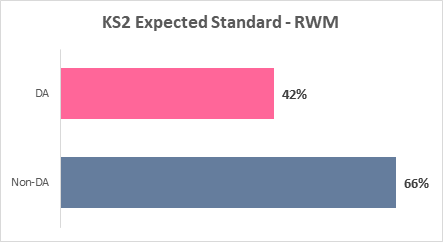
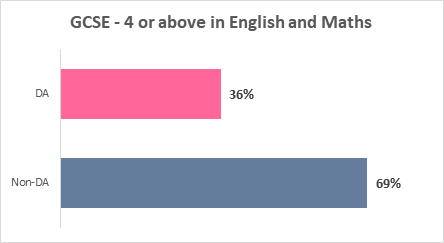
Only 36.1% of children classed as “Disadvantaged” (DA) in Staffordshire achieved a grade 4 or above in their English and Maths GCSEs in 2022/23. For our “non-disadvantaged” children, this figure stood at 67.6%. Our Children in Care or with social workers will often face a greater challenge throughout their education compared to their peers, and as our children progress through their school lives, the average attainment gaps between DA and Non-DA children continues to grow.
The Virtual School aims to improve the education outcomes for our children in care and previously looked after children. We also aim to help the education journey for all children with a social worker and by working with schools more closely to focus on our RADY principles, hopefully improve the attainment outcomes for all disadvantaged youngsters.
The problem with progress
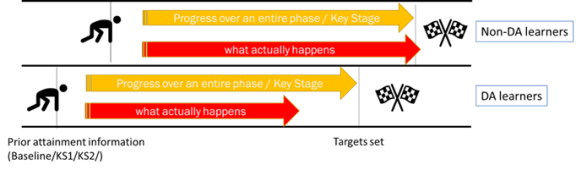
- Our Disadvantaged learners will often start with a lower prior attainment than their non-DA classmates.
- They are given lass ambitious targets because of the outcome of a couple of assessments done 2 or 3 times in their lives.
- Our DA learners will often make less progress towards these targets – compounding the problem for their next assessments.
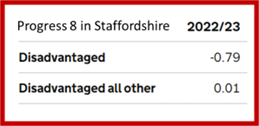
Even if the DA learner makes expected progress against their targets, their outcomes will always be lower than non-DA classmates. But the school can report “Standard progress” for ALL their learners with a Progress 8 score of 0.00.
Equity in teaching and learning
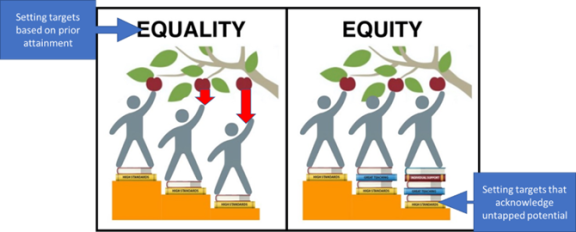
Using an equitable model for our target setting and teaching and learning, we can take into account the “untapped potential” that our disadvantaged learners have.
RADY Training
We have introduced a mandatory training session to all Staffordshire Children's and Families workers around RADY principles and how they can help promote the attainment of disadvantaged young people in their roles. Staffordshire Local Authority members can access the training via the Learning Hub link below.
https://learn.staffordshire.gov.uk/course/view.php?id=1679
RADY Resources
ALL Staffordshire schools have FREE access to ‘Thinking Differently for Disadvantaged Learners’ created by Challenging Education. These award-winning resources offer a vast range of videos, worksheets, tutorials and CPD materials on all things RADY. We would highly encourage any school to look through ‘Thinking Differently for Disadvantaged Learners’ and see the power of RADY for themselves.
‘Thinking Differently for Disadvantaged Learners’ - Professional Learning Programme – Challenging Education
Research into Raising Attainment of Disadvantaged Youngsters – DfE - Supporting the attainment of disadvantaged pupils - GOV.UK (www.gov.uk)
RADY Beacon School Pathway – FULLY FUNDED TRAINING OFFER FOR SCHOOLS
We are currently working more closely with two cohorts of Beacon schools on our RADY Pathway, with a third cohort starting their journey in September 2024. This, FULLY FUNDED offer includes bespoke tutorials with Challenging Education, school visits from their members and Virtual School colleagues as well as ongoing, online support throughout the pathway after the first year of tutorials have been completed.
Whilst this pathway is still in its infancy, we have seen some fantastic progress from all learners in these schools, particularly those disadvantaged learners who most need our support.
100% of schools who have given feedback would recommend the pathway to another eligible school in Staffordshire, with 80% stating that the support they have received has been “Excellent”.
Whilst our attendance and suspension data is provisional, on average, schools on the RADY pathway have seen a greater increase in DA attendance from 2022/23 into 2023/24 and a greater decrease in DA suspensions when compared to other schools in Staffordshire who are not on the pathway.
Joining the RADY Pathway
If you or your school are interested in becoming a RADY Beacon School or would just like to know more details on the offer, please feel free to contact our RADY coordinator.
Adam Blundell - adam.blundell@staffordshire.gov.uk